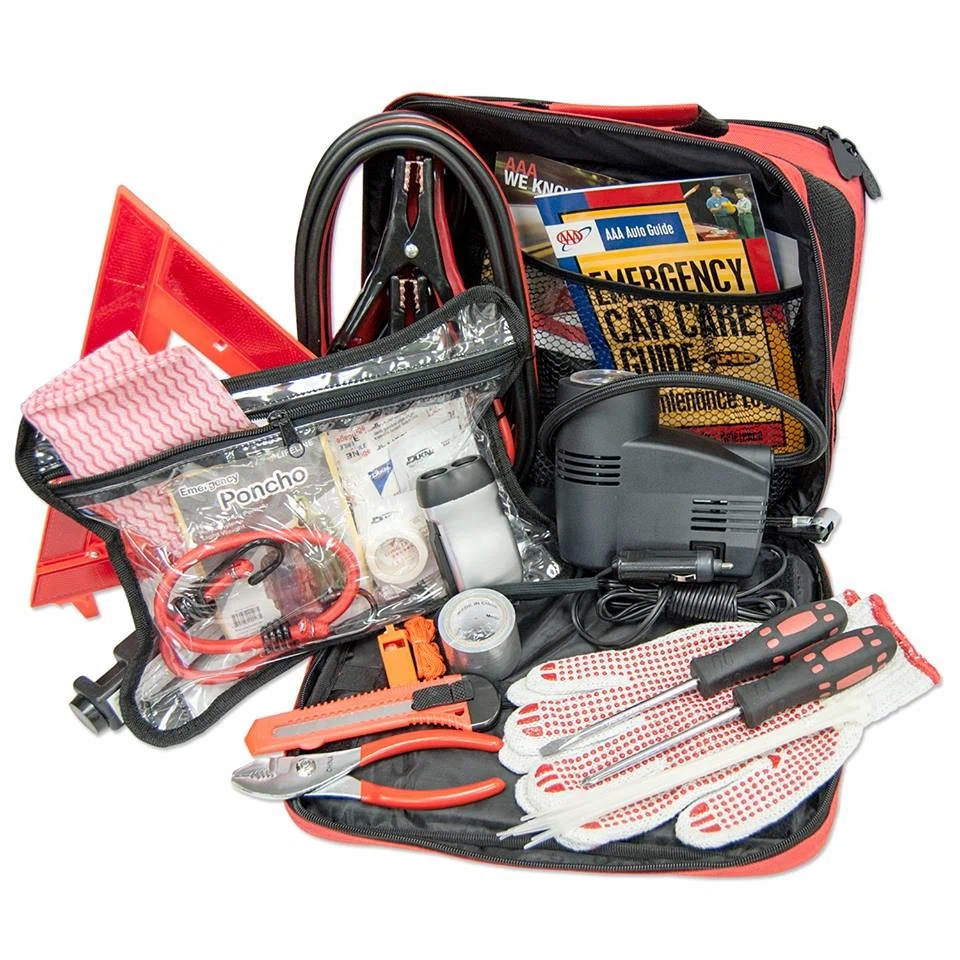
Driving is often something we take for granted. You get into your car, it takes you where you need to go, and that’s the extent of it. Sometimes, though, our cars fail us, or inclement weather makes it impossible to reach our destination safely. This is when a roadside emergency kit comes in handy.
If you experience a roadside emergency, especially if you’re not extremely close to the help you may need, you’ll be much more prepared with at least a basic emergency kit. Even if you have a membership to a roadside emergency service such as AAA, it sometimes isn’t enough — you may have to wait awhile, especially considering where you are. Also, some of the more basic emergency assistance services only include a certain amount of calls per year, and you wouldn’t want to waste one of those calls on something you could have fixed yourself had you just been more prepared.
Before we get into what to include in your emergency kit, make sure you commit to keeping the kit updated. Check on your kit every once in awhile to make sure everything is still in fine working order. Ensure your spare tire is inflated, all your batteries are charged, and none of your first aid supplies are expired. Also, consider whether your needs have changed. For instance, if you used to live in a warmer climate where snow wasn’t a concern, but have now moved up north, you may need to add a few cold-weather items to your kit.
There are a few basic things you need no matter what, even if you’re not doing any long-distance driving or driving in snow. First, and absolutely most importantly, is a cell phone and car charger. Now, obviously you’re not keeping your phone in your car, but you do need to make sure you have it on you, (stowed safely while driving, of course) as well as having a working charger that you can use if you need it. Be sure to stay alert and aware of your surroundings while you’re driving. If you need to make a call to 911, you’ll want to know as much about your location as you can. It’s also important to have easy access to your roadside assistance company’s phone number.
First aid supplies are another important element to your basic kit. Make sure it’s a thorough, comprehensive kit, not just a box of bandaids. You may never have to use it, but if you do, you’ll be glad you have it. In addition to first aid materials, you’ll want gloves, rags and water. Even the most basic car repair can get your hands dirty, so if you’re popping the hood at all, you’ll want to be able to cover your hands, or at least wash them after.
Safety is of the utmost importance when you’re in a roadside emergency situation. Make sure you have a fire extinguisher, as they can save your life and/or your car in the event of a car fire. It’s also very important to have some sort of hazard light or flare. Especially if you’re stopped on or near the road at night, other cars need to know that there’s a hazard ahead. If they don’t see you as they approach, they could cause a crash or even hit you. There are different types of flares and you should choose what’s best for your situation. There are powerful battery-powered lights, and there are also reflective, non-battery powered ones.
When it comes to basic tire maintenance and repair, items like a tire gauge, jack, lug wrench, and foam tire sealant can be very helpful. You should use the tire gauge to check your tire pressure on a regular basis anyway. The jack and lug wrench will come in handy if you need to change a tire. They often come with your car, and your owner’s manual should tell you where to find them. Tire sealant can repair minor punctures, but it should only be used in a true emergency as many tire shops won’t repair tires with sealant on them due to the sticky nature of the sealant. Remember that this is not a permanent fix and you should go to a tire repair shop as soon as possible.
One of the first things you should check when you have car problems is whether it’s a burned-out fuse, because it often is. Keep an assortment of extra fuses in your roadside emergency kit so you will be able to find what you need. Your owner’s manual can tell you what types you should have on hand. You should also be sure to keep a set of jumper cables or even a portable battery booster in your car in case you have battery troubles.
A few other miscellaneous items you should always have just in case include a flashlight, small bills and change, and a pen and paper. Anytime you’re doing any car-repair-related tasks in the dark, you’ll want to have a flashlight so you can see what you’re doing. It’s especially useful if there’s a magnet on the flashlight so you can free up your hands to work on the car. Be sure to include extra batteries and an extra bulb in your kit. There’s nothing worse than finding the flashlight and then realizing it won’t turn on. The change can come in handy for tolls or even just if you find yourself in a situation where there’s only one gas station around and they only take cash.
When driving long distance, especially if you’ll be in remote areas at all, you’ll want to bring a wider range of tools. It’s good to keep a basic toolkit in the car for situations like this. Make sure you have socket and open-end wrenches, a set of pliers, and a multi-tip screwdriver. There are some simple jobs anyone can do, like changing light bulbs and tightening battery cables, but even if it’s not you doing the fixing, someone is going to need the right tools. Tape and a coolant hose repair kit can also be helpful.
When it comes to remote areas, you’ll want to have emergency food and water available, just in case you’re stuck for longer than you were prepared for. If you’re driving somewhere where cell service is spotty, a CB radio can come in handy in an emergency. You’ll also definitely want some sort of GPS navigation system (most often in your cell phone), unless you are especially gifted at reading maps.
Winter driving is a whole different beast and can call for lots of extra tools. First of all, you need a successful, probably heavy-duty windshield scraper. A credit card is not going to cut it. Get the kind with a scraper on one end and a brush on the other. You don’t want to get your jacket all wet brushing all the snow off before you even start scraping. Tire chains can really help to avoid problems with driving on snow in the first place, but if you do get stuck, a floor mat, a bag of kitty litter, and/or a small shovel can come in handy when you’re trying to get out.
If you’re so stuck that you just have to wait for help, you’ll want some things in your kit that can provide warmth. A blanket, winter hat and scarf can help to insulate you from the cold if you’re out of gas or your car can’t keep you warm for some other reason. There are also chemical hand warmers available at outdoor supply stores.
Roadside emergencies can certainly be scary. But if you have a well-stocked roadside emergency kit, you can be prepared for just about anything you might need to face.